
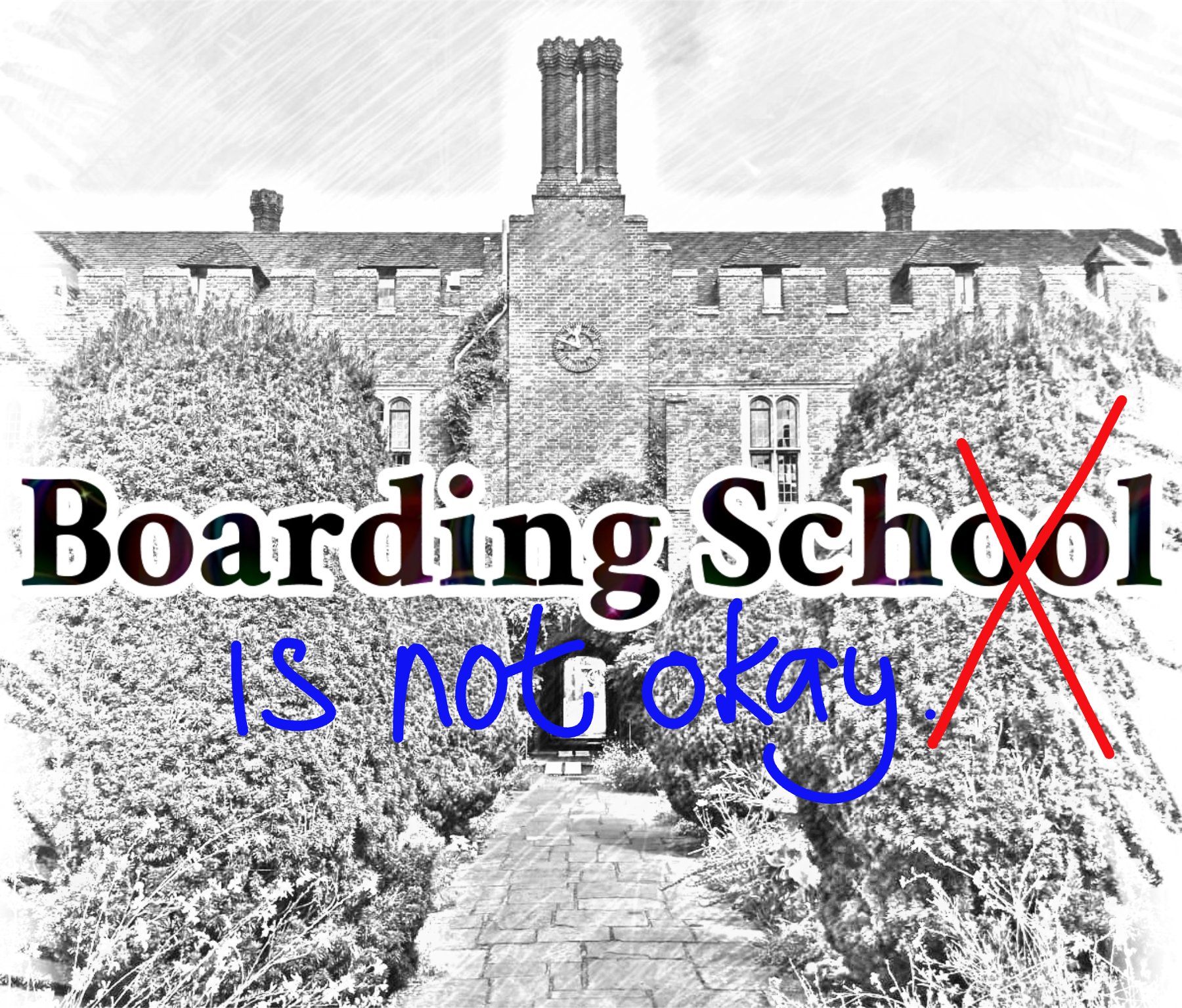
About Life after Boarding School - The long term impact (Oxfordshire)
Life after boarding school - the long term impact.
This event is specifically limited to those who are ex-boarders and therapists/mental health professionals.
Boarding School is so ingrained in the British psyche as something to aspire to that it is near-impossible for the ex-boarder to talk about what it was really like without sounding ungrateful or spoilt.
Therapists, on the other hand, may sense that all was not well but report an impenetrable culture of silence in ex-boarding clients. Previous attendees have noticed that such clients almost never voluntarily relay their experiences - in part because it isn't what brought them into therapy in the first instance.
“I see a lot of you lot in here!” - Rehab/Addiction counsellor - response to advert.
“I LOVED Boarding School - you don’t speak for everyone” - Ex-boarder - response to advert
Approximately one in one hundred children are 'sent away' to "Britain's finest educational establishments". Yet, at the most recent event, one therapist stated one quarter of her current client list have attended boarding school - she specialises in young adults.
Drawing on my expertise in psycho-linguistics, and having had a ‘Road to Damascus’ moment, I realised no one ever asked, "How was it for you?"
On the rare occasions an ex-boarder might mention their past, one predictable response is, "Oh, which one?" as if we are being pegged into an invisible hierarchy. In reality, any mention of boarding school is usually quickly stymied by a retort declaring "I wish I had gone!” Discussions then evolve into non-attendees imparting their perceptions gleaned from popular culture.
I suspected that other ex-boarders might similarly not "have the language" to adequately describe what life was like in near-permanent formal education. For many, relentless shame has inhibited us from verbalising the loneliness, the abuse and the violence we witnessed, or experienced first hand, day-in, day-out.
More is known of the boys’ experiences, but very little of the research/literature focuses on that of girls’ - even though in more recent years, many girls grew up in former all-boys schools. Girls’ entry to the better facilities was only secured to keep the schools financially viable: thus they were immersed in heavily patriarchal systems that were clueless about girls’ needs. That said, other boarding schools have remained staunchly segregated by sex - what does this do for the child in development when they do not go home to socialise with siblings/cousins and friends of the opposite sex? How do ex-boarders adjust to living and working alongside others in a society that is significantly less segregated and prejudiced?
This talk is also keen not to overlook the unique vulnerability of those children who came from overseas to be plunged into an unfamiliar culture, sometimes with little familiarity with the language.
And yet, what do all our alma maters have in common? In short: a lack of respect for personal boundaries and privacy; a fervent belief that they are better placed to ‘make the child’; a noticeable absence of adults, and of course, the jaw-droppingly beautiful buildings and gloriously green surroundings that go on for miles. Nonetheless, it would be remiss of me not to mention their ongoing outcries of,
“We’ve changed! It’s not like that anymore” - Every Boarding School out there.
Their response simultaneously acknowledges it was ‘less than great’ before, and yet deflects any opportunity to criticise them in the present tense. Subsequently, by claiming to have overhauled their provisions, it negates the previous attendees' experiences. If we choose not to send our own children (at attractively discounted prices) it is assumed that, “We can’t afford the fees”.
In the face of all that, it can feel like heresy to say, “I don’t think boarding schools are okay.” Indeed, I doubt anyone would indignantly respond to my adverts if I put up an advert saying “Tomatoes are not okay!” but the words “Boarding School” provokes a stirring response, and the odd bit of vitriol.
Most of us are undermined by the resolute belief (both inducted and deducted) that we individually were the problem rather than the systems we were brought up in.
"I thought I was the only one!" - Pretty much every ex-boarding attendee!
This event examines the 'quirks', and 'internalised beliefs' typical of someone who has gone to boarding school - be it the more amusing, “I inhale food” and “I still count down the holiday days with increasing dread” to the desperately sad, “I thought I was just a problem child” and “I don’t know where I belong - where I fit”.
By conveying the subject through structured segments, the talk reveals the difficulties we might have had adapting to free-flowing [university/working] life after a rigidly command-and-controlled bell-driven existence. We can describe our overwhelming inability to relax, have fun, and be 'spontaneous' like we might observe in many of our organically-brought up peers.
“It’s guilt, not fear! That is what stops us chilling out.” - Ex-boarder at the last event.
“That!” - chimed everyone else!
Collectively, we can note the challenges of being a parent when one has no imprinting of what is 'normal' for specific age groups: When do children stop wetting the bed? When do children stop playing with toys? Why do they stop crying? We can also acknowledge the tendency for ex-boarders to be childfree. We might mention our difficulties in developing healthy, trusting bonds with others as well as our profound doubts around our ability ‘to parent’ - whether or not we are responsible for children currently.
We may acknowledge an on-going sense of estrangement from life as it really is. Further discussion might lead us to see how we are inclined to compete rather than collaborate - and how that might cause us employment difficulties. We might touch on our perceptions of failure as adults for not being “prime minister” or “captains of industry” and our beliefs that “we are never doing enough” and we must “aim for perfection all of the time,” .
“I thought it was just me who collected certificates!” - Ex-boarder at the last event!
We might speak for the first time about the wretched grief we felt being separated from our pets, toys, homes, loved ones and ‘ordinary life’ time and time again. We might disclose what we had to do to suppress or avoid the subsequent emotional distresses (in ourselves and in others). We may also recognise there has been a permanent fracturing of our relationship with our parents and siblings. There may be continuing disbelief and anger that we were sent away and frustration that our demands to go home were ignored or denied.
My own accidental realisation of the deep impact of going to boarding school had (as a "Third Country Kid") also had me wondering what would happen if I brought the two communities together: the therapists and the ex-boarders.
It was my aim to give the ex-boarder the safe space to describe how it really was for them - but only at their own instigation. This isn’t a ‘sigh and cry’ event, but rather offers a frank discussion of our experiences in “everyday” language (rather than having to read about the effects of boarding school in ‘clinical’ or ‘academic’ vernacular.) Secondly, I thought it would be helpful to bridge the gap between the expectation we should “just get on with it” and recognising our needs as sentient human beings.
“I had to wait until my parents were dead before I could admit my time there was terrible” - Previous attendee.
“I didn’t think I would ever talk about what happened to me” - Previous attendee.
It is up to the ex-boarder how much, or little, they contribute - we are, after all, a group that has mastered the profound art of secrecy and denial. There is a tangible atmosphere of relief as our “child”hoods are deconstructed so we can see ourselves as little beings who had to navigate being raised by other people's children and a handful of strangers all the while being barracked from place to place by bells and bellowing adults.
“I feel like a weight has been lifted!” - Ex-boarding attendee - reflecting after the event.
“I can see I have never properly grown up” - Ex-boarding attendee
I thought it was also important for there to be witnesses to the opening up of a conversation - and figured it may prove to be invaluable for the mental health specialists to 'see' and ‘hear’ what actually happens in these grand stately buildings once the parents drive away. What really happened on the first night? When does the reality of their abandonment truly sink in? What happens to the child’s relationship with time? How quickly do the children learn to “mask” their fear and their feelings?
By sharing what is ‘known’ through research with the real reactions and testimonies from the ex-boarders, I believe therapists are better positioned to generate the very essential conversations their clients might sorely need. To help challenge some oft-made assertions, such as, “the children soon settle into the swing of things” or “occasionally there are problems, but most enjoy it” or the “the children are so happy playing with their friends, they don’t want to come home anymore”. The typical phrases expressed by the adults who exchanged us - which provide comfort only to them and can clash horribly with the participants’ own points of view.
“An amazing experience…wonderful and insightful”- Therapist from the previous event.
“It opened my eyes about a subject not researched or talked about, the pain, suffering and emotional abuse that is still happening in boarding schools in plain sight”- Therapist reflecting via email on the event.
It was my aim initially to create a unique, but unforgettable conversation, to help a few of us gain a better understanding of what a ‘privileged upbringing’ entails. I thought it would be a one-off event. The last one sold out so now I am now endeavouring to bring them further afield as well as in the Oxfordshire region.
Feel free to contact me if you have any questions regarding your participation. PI@personirresponsible.com
This event is specifically limited to those who are ex-boarders and therapists/mental health professionals.
To the ex-boarder: Please come along no matter what your assumptions are. Perhaps you loved your time at boarding school, but you might be baffled by some aspects of everyday life and accept it’s “just how you are”. On the other hand, y
Message the event organiser
Questions about this event?
Event Passed
Already have a ticket? Message the event organiser above if you need help.
Where
Cassington Village Hall
The Green
Cassington
Oxford,
OX29 4AX